
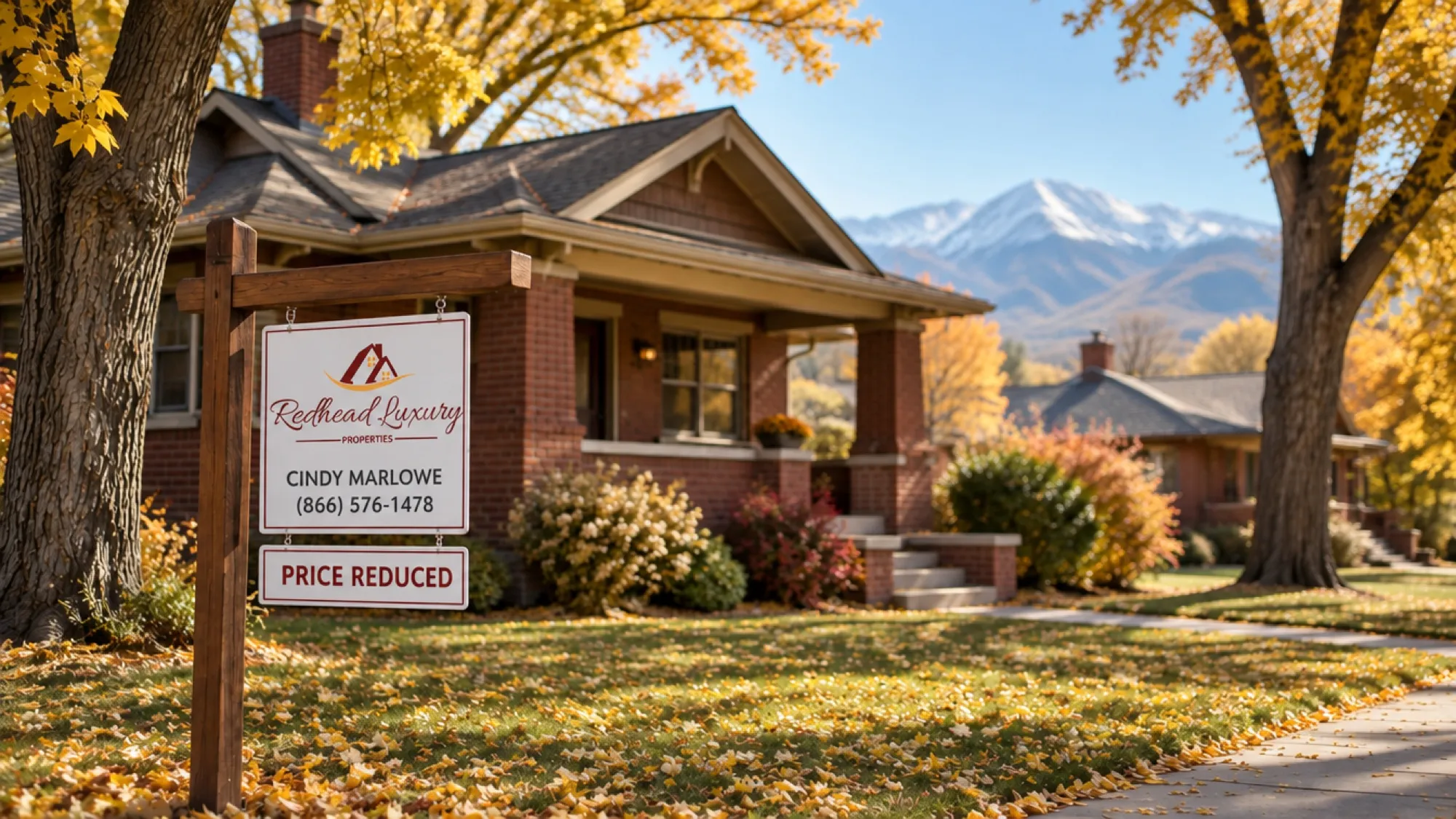
Short answer: no, the Denver housing market is not crashing. Prices on detached homes are flat, not falling off a cliff. But if you’ve felt like something is off, you’re right. September 2026 was the slowest September for closings on record going back to 2008, inventory is the highest it has been in 15 years, and 80% of the homes that sold in the metro did so with a price cut or a seller concession (money the seller puts toward the buyer’s costs). That isn’t a crash. It’s a correction in how homes sell, not in what they’re worth. The difference matters a lot if you’re thinking about listing.
I’ve been selling homes in Denver since 2003. I’ve worked through 2008, the 2020 frenzy, and the hangover after. What follows is my read on where we are right now, using the September 2026 numbers from the Denver Metro Association of Realtors and the Colorado Association of Realtors. No spin, and no “it’s always a great time to buy or sell.”
Is the Denver housing market crashing, cooling, or correcting?
It’s cooling, and it has been for about two years. A crash means prices drop fast and broadly, usually 15% to 20% or more, because owners are forced to sell. That’s not happening in Denver. The year-to-date median price for a detached home is $650,000, and it has been $650,000 for three years running.
What has changed is everything around the price. Here are the September numbers that matter:
- Active listings: 13,567, the highest September level since 2011
- Closed sales: 2,849, down 21% from a year ago and the lowest September since 2008
- Months of supply: 4.76 overall, 7.21 for condos and townhomes
- Median days on the market: 32
- Sales with a price cut or seller concession: 80%
Months of supply is how long it would take to sell every home on the market at today’s pace. Four to five months is where the textbook calls the market balanced. Anything above six leans toward buyers, which is exactly where condos and townhomes sit right now. Single-family houses are still closer to balanced. So it’s a two-speed market: houses are holding, condos and townhomes are softening.
Why does the Denver market feel so bad right now?
Because three things hit at once: more homes for sale, fewer people able to buy them, and mortgage rates that went the wrong way.
The rate part is the one most people missed. The 30-year fixed climbed from roughly 6.9% to about 7.5% during September, after the Federal Reserve raised rates in mid-September for the first time since 2023. On a $565,000 home with 5% down, that’s a payment north of $3,700 a month before taxes and insurance. A lot of buyers who were pre-approved in July aren’t pre-approved for the same house in October.
Meanwhile, sellers kept listing. Inventory rose 3.7% from August to September when the historical pattern is less than 1%. More supply, less demand, and buyers who know they have options. That’s the squeeze you’re feeling, and it’s also why Colorado ranked first in the country for price cuts.
Will Denver home prices drop in 2026?
Modestly, in some segments, and they already have. The metro median closed price in September was $565,000, down 1.7% from a year earlier. Single-family came in at $610,000, down 1.3%. Condos and townhomes were $375,000, down 6.2%.
That’s the list price story, though, and it hides the real one. Homes that cut their price in September closed about 8.3% below the original asking price. Homes that were priced right from day one closed 1.7% below ask. Same market, same month, a five-figure difference on a typical Denver home. On a $565,000 list price, that gap is roughly $47,000 versus $9,600.
So will prices drop? For the seller who prices for 2022 and waits for the market to come to them, yes, by a lot. For the seller who prices for October 2026, the drop is small. The market isn’t taking value away. Overpricing is.
Is Denver overvalued?
Compared to what buyers can pay at 7.5%, yes, which is why it’s slow. Compared to what the city is, I don’t think so. Denver still has the jobs, the airport, the mountains, and a population that keeps coming. What it doesn’t have right now is affordability, and that’s a rate problem more than a price problem.
Here’s the number I’d watch instead of the headlines: in September, homes sold for 98.45% of their final asking price on average, slightly better than a year ago. Homes that sell are selling close to their final list price. That doesn’t happen in an overvalued market on its way down. It happens in a market where buyers are picky but still willing to pay a fair number for the right home.
When will the Denver housing market recover?
Honestly, nobody knows, and anyone who gives you a month is guessing. What I can tell you is what recovery depends on: rates. Lenders are talking about 7.5% holding into 2027. If that’s right, 2027 looks a lot like late 2026, with plenty of inventory, patient buyers, and sellers who need to earn the sale.
If rates ease back toward the mid-6s, the math changes quickly. There are a lot of buyers sitting on the sidelines who want to be in Denver and simply can’t make the payment work. They won’t wait for a full recovery. They’ll move the moment the numbers work.
I’d stop thinking about “recovery” as prices going back up and start thinking about it as the market finding its new normal. We’re most of the way there.
What about the luxury market in Denver?
This is the part the headlines miss entirely. The $1 million and up segment is up on the year. Year-to-date closings over $1M are 4,449, up 2%, and sales volume is $7.3 billion, up 3.2% and close to the 2022 peak. The median time on the market for a luxury home is 21 days, which is faster than the overall market.
Luxury condos and townhomes are the surprise. Those over $2 million are up 11% in closed sales this year. The highest attached sale in September was a Cherry Creek North property at $4.3 million, cash, eight days on market. The highest detached sale was $7.4 million in Castle Rock, also cash.
The reason is simple: luxury buyers are less sensitive to a 7.5% mortgage because many of them aren’t using one. So while the $500,000 to $750,000 band saw closings drop nearly 30% year over year, the top of the market kept moving. If you own in that segment, you’re in a different market than your neighbors.
What does this mean if you’re selling in Denver in late 2026?
It means you can sell, and sell well, but only if you accept that the game has changed. The sellers who are winning right now are doing a few things differently:
- Pricing to comparable sales from the last 60 days, not to what the neighbor got in 2022. The data above shows exactly what overpricing costs.
- Expecting to negotiate. Two out of three metro sales in September included a seller concession. Budget for it up front so it doesn’t feel like a loss later.
- Preparing the home before it lists. With 13,500 homes to choose from, buyers skip the ones that need work. Paint, declutter, fix the small stuff, and photograph it properly.
- Listing when ready, not waiting for spring. Spring will bring more buyers, but it will bring more sellers too. A well-priced home in November competes against less.
If you’re buying, the mirror image applies. You have selection, you have time, and you have leverage. Thirty-two days on market and 64% of sellers offering concessions means you should be asking for help with closing costs, money toward a lower mortgage rate, and repairs. Twelve months ago, you couldn’t.
The bottom line on Denver’s market
Denver isn’t crashing. It’s a slow, well-supplied, rate-constrained market where the spread between a well-priced home and an overpriced one has never been wider. The buyers are still here. They’re just careful, and they have the numbers to be.
If you’re wondering what your home would actually sell for in this market, not what Zillow guesses, I’ll run a real comparative analysis using the last 60 days of sales in your neighborhood. There’s no cost and no obligation, and I’ll tell you honestly if I think you should wait.
Ask for your free valuation and I’ll get back to you personally, usually before Colorado wakes up.
Cindy
Data sources: Denver Metro Association of Realtors October 2026 Market Trends Report (September 2026 data) and the Colorado Association of Realtors September 2026 statewide report. Mortgage rate figures from Freddie Mac and Mortgage News Daily as of early October 2026.